 EN

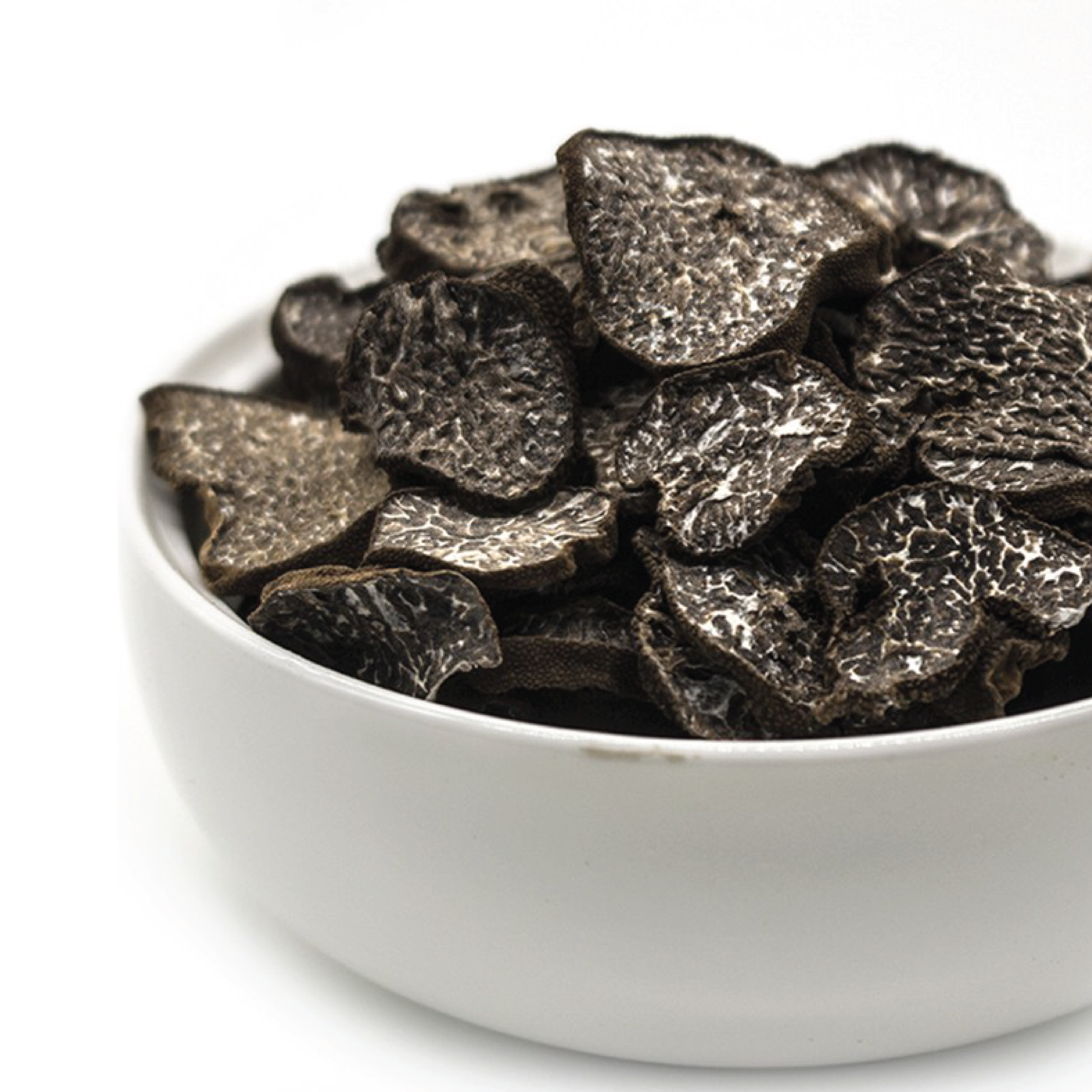
Physical Inspection: Firmness, Surface Integrity, and Morphological Authenticity
Assessing firmness and absence of soft spots or mold as freshness benchmarks
A high-quality black truffle should feel firm and dense under gentle pressure—comparable to a chilled fresh root vegetable. Avoid specimens that yield soft spots, feel spongy, or compress unevenly, as these indicate internal decay, excessive moisture loss, or enzymatic breakdown. Fresh Tuber melanosporum contains 72–75% water by weight; at room temperature, it can lose 2–5% of total weight per day due to transpiration (postharvest studies, 2023). This rapid moisture loss makes firmness a reliable freshness benchmark. Inspect every side—including the base and any cracks—for mold. Small patches of white mold may be harmless surface mycelium, but blue, green, or black colonies signal spoilage. Healthy truffles emit a clean, earthy aroma—not sour or ammoniated. When buying wholesale, request a random sample from the middle of the batch. Reject lots where more than a few truffles show soft depressions or visible mold.
Recognizing natural warts, fissures, and convex contours versus artificial tampering (e.g., dirt-filled holes)
Natural black truffle peridium features polygonal warts and irregular, convex contours. Fine fissures and shallow crevices are normal—and often hold residual field soil. But this texture also invites tampering: some handlers pack dirt, clay, or sand into holes to add weight or conceal damage. Use a soft-bristle brush to test surface integrity. Natural soil flakes away easily; compacted filler feels hard and often covers unnaturally uniform patches rather than following skin lines. Look for suspiciously smooth areas, symmetrical roundness, or glued-on sections. High-quality truffles have firm, dark brown to black skin with fine white or reddish veining inside—the exterior should never appear painted or oily. Avoid lots with repeated small puncture holes, which may indicate injection sites for water or oil. Surface authenticity means warts, ridges, and cracks remain continuous and unbroken. If a crevice looks too clean or artificially widened, request a cut sample. Always corroborate morphology with aroma and weight checks.
Sensory Evaluation: Aroma Profiling and Olfactory Red Flags for Truffles
Identifying hallmark earthy, musky, and ethereal notes characteristic of premium Tuber melanosporum
Premium Tuber melanosporum emits a layered, evolving aroma—not a single dominant note. At first sniff, expect damp forest floor, wet earth, and subtle hints of cocoa or toasted nuts. As the truffle warms in hand, musky, garlic-like, and faintly ethereal notes emerge. Gas chromatography-olfactometry identifies dimethyl sulfide and 2-methylbutanal as key contributors to the earthy and ethereal top notes, while 3-methylbutanal adds malty depth (Culleré et al., 2010). Reject specimens smelling sharp, sour, ammoniacal, or like boiled vegetables—these indicate age, microbial spoilage, or misidentification. Freezing flattens volatile compounds and dulls the signature bouquet (Culleré et al., 2013). For wholesale inspection, cut one truffle per case and smell the exposed gleba immediately: intact peridium can mask a faded interior. The aroma should persist for several minutes without turning chemical or acrid—a balanced evolution separates true T. melanosporum from lower-value species such as T. indicum, which typically reads flatter and less complex.
Detecting adulteration—oil treatment, masking agents, or scent fatigue—during truffle aroma assessment
Adulteration reveals itself first to the nose—not the eye. Genuine truffle aroma fades within minutes at room temperature, but oil-treated specimens often carry an aggressive, solvent-like note from synthetic 2,4-dithiapentane. Commercial truffle-flavored oils frequently lack authentic T. melanosporum volatiles and instead deliver a flat, oily, one-dimensional scent (Torregiani et al., 2017). Masking agents introduce cloying sweetness or menthol coolness—neither of which occurs naturally in fresh black truffles. To avoid scent fatigue, assess no more than four or five lots per session and reset your olfactory palate between samples using neutral skin or coffee beans. Reject batches if the aroma seems unnaturally stable, overly intense after hours, or disappears abruptly. Always cut one truffle per case and smell the exposed gleba: a sprayed peridium can deceive a quick pass. Consistent controls and palate resets are as essential as a trained nose. Synthetic aromas lack the earthy, musky evolution of real truffles—and remain flat from first to last sniff.
Objective Metrics: Weight-to-Size Ratio and Density as Freshness Indicators for Truffles
Freshness in black truffles is not purely subjective; objective measurements provide a reliable first screen before wholesale purchasing. The most practical field metric is weight-to-size ratio: a high-quality Tuber melanosporum should feel noticeably heavy in the palm relative to its diameter. Because truffles are composed largely of water and volatile aromatic compounds, moisture loss begins immediately after harvest. A truffle that feels light for its size has likely been stored too long or under low-humidity conditions—causing aromatic oils and water to evaporate. Dense truffles retain internal turgor and are more likely to deliver the expected earthy, musky aroma.
To apply this consistently, buyers can compare truffles of similar grade and diameter side by side. The heavier specimen is almost always fresher—because water loss directly reduces density without altering surface appearance. However, density alone cannot confirm species or origin, so it must complement sensory and traceability checks.
| Weight Feel for Size | Likely Condition |
|---|---|
| Feels heavy, dense | High moisture retention, fresher |
| Feels light, hollow | Dehydrated, likely older or improperly stored |
| Noticeably soft with normal weight | Possible internal decay or overripeness |
Authenticity & Traceability: Verifying Origin, Certification, and Cold Chain Integrity in Bulk Truffle Sourcing
Evaluating supplier credibility through PDO/PGI documentation, harvest-date transparency, and temperature-controlled logistics
Supplier credibility for wholesale truffles depends on verifiable origin data—not marketing claims. Request PDO (Protected Designation of Origin) or PGI (Protected Geographical Indication) certification where applicable, then cross-check those documents against batch-level harvest dates, species names, and collection sites. A 2022 survey of specialty food importers found that 34% had encountered fraudulent documentation involving high-value perishables (Food Fraud Prevention Think Tank, 2022), underscoring that auditable traceability matters more than paper certificates alone. Evaluate these signals:
- Whether third-party audit reports confirm legal registration, harvest certification, and cold-chain adherence.
- Whether temperature-controlled logistics show continuous refrigeration between 2°C and 4°C—without gaps in storage or transit.
- Whether facility visits or virtual inspections verify sorting, grading, and packaging at the declared origin.
Cross-check references from other premium food businesses, and treat inconsistent labeling or repeated delays as red flags.
Frequently Asked Questions
What firmness should I look for when inspecting truffles?
High-quality truffles should feel firm and dense under gentle pressure, without soft spots or spongy areas that indicate decay or moisture loss.
Can mold on truffles indicate spoilage?
Small white mold patches may be harmless, but blue, green, or black molds signal spoilage and should be avoided.
What is the hallmark aroma of premium black truffles?
Expect a layered aroma of earthy, musky, garlic-like, and subtle cocoa notes. Reject sharp or sour-smelling truffles, as these indicate spoilage or age.
How can I detect adulteration in truffles?
Look for unnatural or overly intense aromas, solvent-like notes, or surface irregularities. Cut and smell the gleba to verify authenticity.
Why is weight-to-size ratio important?
Dense truffles are fresher due to higher moisture retention, whereas light truffles suggest dehydration and lowered aroma quality.
Why is traceability critical in truffle sourcing?
Traceability ensures that the truffles’ origins are credible, authentic, and have adhered to a cold chain, reducing fraud risks.
Table of Contents
- Physical Inspection: Firmness, Surface Integrity, and Morphological Authenticity
- Sensory Evaluation: Aroma Profiling and Olfactory Red Flags for Truffles
- Objective Metrics: Weight-to-Size Ratio and Density as Freshness Indicators for Truffles
- Authenticity & Traceability: Verifying Origin, Certification, and Cold Chain Integrity in Bulk Truffle Sourcing
- Frequently Asked Questions