 EN

Authenticity Verification: How to Buy Black Truffles with Confidence
Distinguishing Tuber melanosporum from Counterfeit or Substituted Varieties
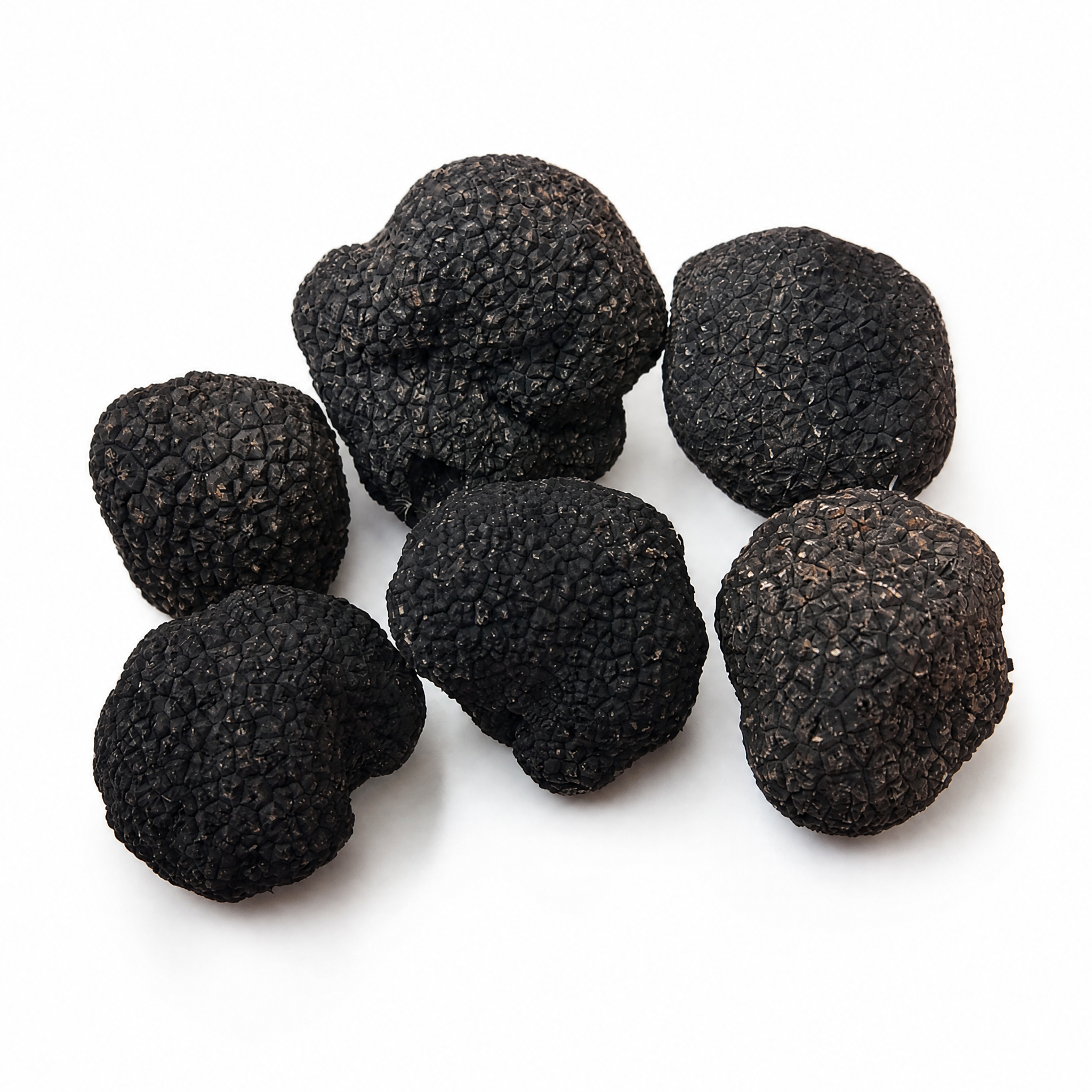
When you buy black truffles, the first risk is substitution. Genuine Tuber melanosporum has a black-brown, warty peridium and a marbled brown-black interior with fine white veins. Its aroma is strong, earthy, and slightly garlicky—distinct from the muted or chemical scent of common substitutes like Tuber indicum. A 2024 market report found that roughly 41% of products sold as black truffle contained substitutes, added flavorings, or mushroom stems. Price remains a powerful indicator: authentic black winter truffles typically sell for hundreds of dollars per pound, while Tuber indicum trades for under $1 per pound wholesale. Offers priced 30–50% below market rate should be treated as red flags. The flesh should feel firm with a slight give—not spongy—and display clear white marbling. Authentic specimens emit aroma even before cutting; musty, sour, or chemical odors signal degradation or adulteration. Reject any truffle showing mold, large cracks, or hollow interiors. Always ask suppliers for harvest batch details and explicit species confirmation—vague labels like “black truffle” or “truffle product” are insufficient.
Third-Party Certification and Origin Documentation for Genuine Black Truffles
Certification and origin documentation significantly reduce substitution risk. Reputable suppliers provide harvest dates, region of origin, and unambiguous species identification—Tuber melanosporum, not generic terms—on invoices or labels. Look for third-party verification such as organic certification or protected designation of origin (PDO) marks where applicable, especially in EU-regulated markets. These labels often reflect strict harvesting protocols and geographic authenticity. Soil test results and batch-level traceability reports add further confidence for high-volume buyers. Batch records should link a lot number directly to a specific harvest date, producer, and orchard plot—enabling full recall if needed. While DNA analysis is rarely required for small orders, some professional buyers use molecular testing to verify species when sourcing at scale. Certified suppliers also maintain documented cold-chain handling records. Without verifiable documentation, even a compelling aroma or competitive price may mask a substituted variety. Request origin certificates upfront—and confirm the harvest year aligns with the current or most recent season. A transparent supplier shares this information readily.
Freshness & Cold Chain Integrity: Critical Factors When You Buy Black Truffles
Fresh black truffles are living, respiring products. Their value hinges on unimpaired sensory quality and an unbroken thermal chain from harvest to delivery.
Sensory Indicators of Peak Freshness: Aroma, Texture, and Visual Cues
Evaluate three key signals before accepting a lot. A peak-condition Tuber melanosporum feels firm with a slight give—similar to a ripe avocado—not hard or squishy. Wrinkled or spongy flesh indicates moisture loss, which directly depletes volatile aromatic compounds. The peridium should be rough and warted, not flaking or dusty; surface deterioration signals early degradation. Aroma should be intensely earthy, with notes of garlic, cocoa, or damp forest floor. Sharp ammonia, sour milk, or musty cardboard scents indicate spoilage. Visually, look for dark brown to black skin, clean unbroken surfaces, and substantial weight relative to size—a lightweight or nearly scentless truffle lacks premium value.
Temperature-Controlled Logistics: Why Real-Time Cold Chain Validation Matters
Cold chain performance often determines whether truffles arrive fresh or compromised. Five parameters are critical:
- Pre-cooling within 2 hours of harvest
- Stable thermal conditions with no more than ±1°F variance
- Relative humidity maintained at 90–95%
- Breathable packaging that manages CO₂/O₂ exchange
- Isolation from ethylene-producing cargo
Vacuum-sealed containers with oxygen scavengers can extend freshness by 40% compared to traditional wrapping (Food Packaging and Shelf Life, 2020). Industry logistics data shows approximately 75% of premium perishable quality defects stem from temperature excursions during transit (2024 industry survey). Suppliers committed to freshness should provide real-time temperature loggers, time-stamped cold chain records, and clearly defined packaging protocols—not just assurances of “cold shipping.”
End-to-End Traceability: Transparency from Harvest to Your Door
When you buy black truffles, insist on a supplier that documents the full journey—from harvest location to your receiving door. End-to-end traceability connects backward records (exact harvest plot, date, and lot code) with forward records (cold-chain checkpoints, sorting facility, packaging, and final carrier), forming a single, auditable chain of custody. This minimizes risks of substitution, mixed lots, or undocumented storage.
A credible traceability program for premium black truffles includes:
- Harvest-zone mapping, such as plot boundaries or GPS coordinates of truffle orchards
- Lot-level identifiers tied to harvest date, sorter, and quality grade
- Temperature and humidity logs covering post-harvest cooling through transit
- Digital access via QR code or supplier portal for instant lot verification
These records matter because black truffles rapidly lose aroma and value when exposed to temperature abuse or handling delays. Traceability also allows buyers to independently verify the species claim (Tuber melanosporum) and origin documentation before accepting shipment. In high-value perishable supply chains, full lot-level visibility correlates with faster corrective action and more reliable supplier performance. A supplier unable to show a clear harvest-to-door trail asks you to accept unverified risk on a premium ingredient.
Reliability in Fulfillment: Consistent Sourcing, Timely Delivery, and Service Integrity
Reliable fulfillment is a trust signal: consistent sourcing, order accuracy, and on-time dispatch protect every purchase.
The 48-Hour Dispatch Standard: Why Speed Preserves Value in Premium Black Truffles
When you buy black truffles, freshness depreciates rapidly after harvest. A 48-hour dispatch standard limits moisture loss, aroma fade, and texture softening that occur at ambient temperatures. Leading suppliers confirm harvest date, pack with insulated cold-chain materials, and provide tracking before the parcel leaves their facility. Order accuracy and lead-time consistency reduce spoilage risk, rework, and missed usage windows. The most dependable providers treat dispatch speed as a quality specification—not a logistical afterthought—because every hour of delay erodes both sensory value and buyer confidence in consistent replenishment.
FAQ Section
Q: How can I tell if a black truffle is authentic?
A: Authentic black truffles have a black-brown, warty surface, marbled brown-black interior with fine white veins, and a strong, earthy aroma. Price, firmness, and clear white marbling are reliable indicators, along with credible documentation from the supplier.
Q: Why is certification important when buying black truffles?
A: Certification ensures authenticity and reduces the risk of substitution. Look for labels indicating organic certification, protected designation of origin (PDO), and detailed harvest documentation to verify quality.
Q: What factors impact the freshness of black truffles?
A: Freshness depends on sensory indicators (firmness, aroma, visual cues), temperature-controlled handling, and unbroken cold chain logistics from harvest to delivery.
Q: What should I look for in supplier traceability records?
A: End-to-end traceability should include harvest dates, lot-level identifiers, temperature and humidity logs, and digital access to verify species authenticity and origin.
Q: Why is dispatch speed important for black truffles?
A: A 48-hour dispatch standard ensures optimal sensory quality by minimizing moisture loss, aroma fade, and texture degradation.