 EN

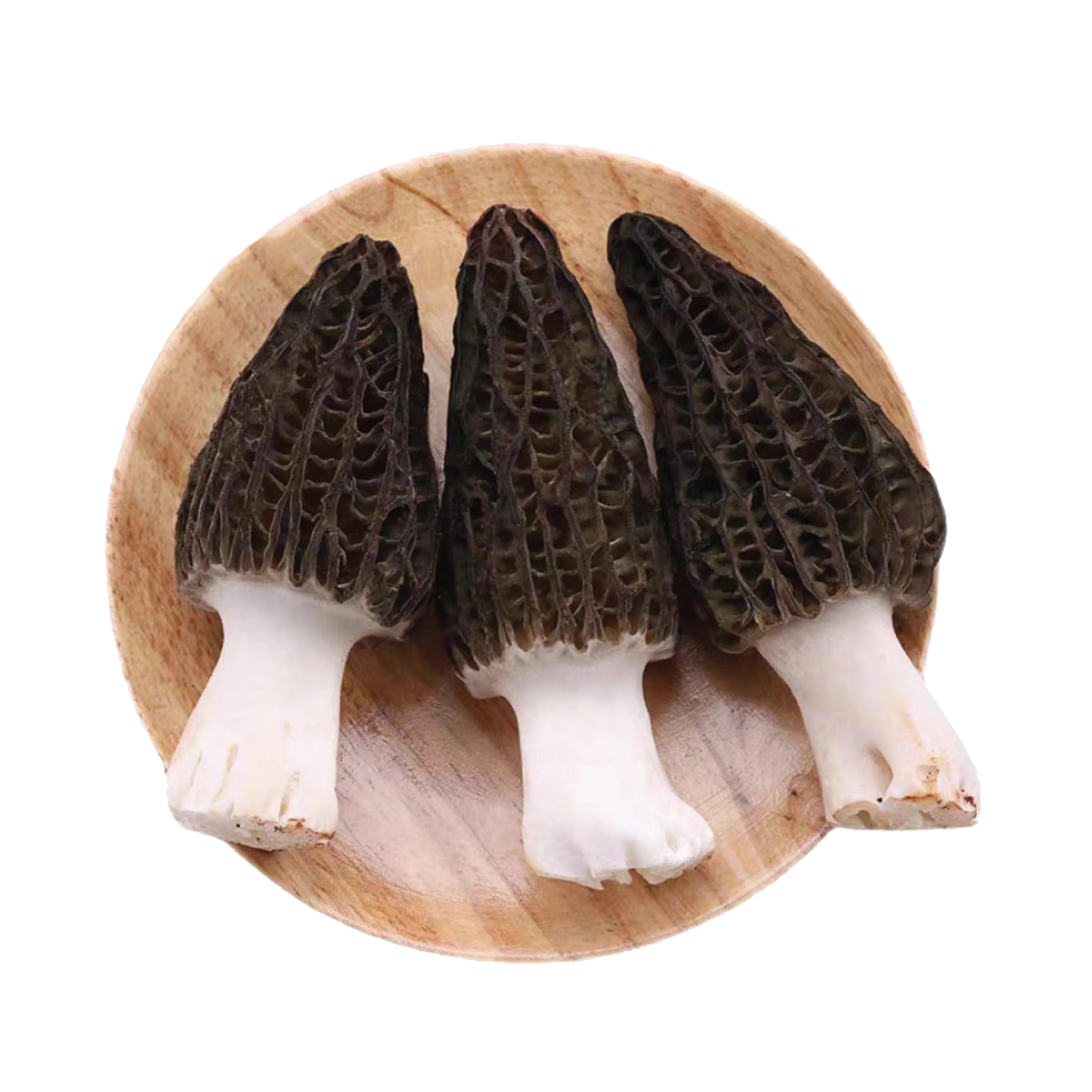
Authentic Morchella Esculenta Identification: Avoiding Substitution Risks
The Honeycomb Cap as the Definitive Macroscopic Identifier
For wholesale importers, the honeycomb cap is the most reliable macroscopic indicator of authentic Morchella esculenta. A true morel cap features deeply pitted, irregular ridges and pits—open, interconnected, and attached directly to the stem at the lower margin. It is typically conical to oval (3–10 cm high) and ranges in color from pale cream to dark brown, often darkening with age. Imposters—including toxic false morels like Gyromitra or Verpa—commonly display folds, wrinkles, brain-like lobes, or shallow, netted surface textures rather than true pits. During pre-shipment inspection, graders must verify that pits are structurally open and continuous, not superficial; caps should fuse seamlessly to the stem—not hang freely or detach easily. Photographic reference libraries and seasonality awareness further strengthen field-level accuracy. If the honeycomb structure appears underdeveloped, shallow, or net-like, flag the lot immediately. This visual screen eliminates the majority of substitution risks before lab testing begins.
Hollow Stem vs. Solid/Chambered False Morels (e.g., Gyromitra esculenta)
A longitudinal section reveals a definitive structural distinction: authentic Morchella esculenta is completely hollow from cap tip to stem base—an uninterrupted cavity with no internal partitions, pith, or fibrous fill. In contrast, Gyromitra esculenta contains cottony, chambered, or solid flesh, while some Verpa species have a cap attached only at the apex and stems filled with loose, spongy fibers. Because admixture can be patchy, inspect multiple specimens per sample; even one non-hollow piece warrants investigation. In commercial sorting, this hollow-stem test serves as a rapid, low-cost second gate—mandatory for food safety. Gyromitra species contain hydrazine toxins that persist through ordinary cooking and pose acute health risks. Record the ratio of hollow to non-hollow specimens; reject the entire lot if any specimen shows internal webbing, chambers, or solid core pending confirmatory identification. This test is not supplementary—it is foundational to preventing toxic contamination.
Real-World Impact: EU RASFF Alert #2022.2847 — Rejection of 3.2 Tons of Misidentified Morchella esculenta
The EU Rapid Alert System for Food and Feed (RASFF) alert #2022.2847 highlights the tangible consequences of identification failure: in 2022, 3.2 tons of mislabeled Morchella esculenta were rejected at EU borders after macroscopic inspection revealed a mixture of true morels and toxic Gyromitra species. Economic losses included freight, destruction costs, and reputational damage—eroding buyer confidence and disrupting seasonal supply contracts. This case underscores that visual and structural QC failures trigger immediate regulatory action, not just long-term brand risk. To mitigate such exposure, importers should apply the hollow-stem test on a statistically valid sample per lot and retain time-stamped photographic evidence. Including the RASFF reference number in supplier scorecards reinforces accountability and signals proactive quality governance. As repeated alerts confirm, substitution pressure remains persistent in the dried mushroom trade—making rigorous, stage-gated identification non-negotiable.
Multi-Stage Quality Control for Morchella Esculenta Imports
Moisture Content Management (12–22%): Balancing Shelf Life, Mold Risk, and Rehydration Performance
Optimal moisture content for Morchella esculenta is 12–22%, with the commercial sweet spot between 14–18%. Lots above 22% significantly increase mold risk—particularly Aspergillus and Penicillium—and accelerate spoilage. Below 12%, caps become excessively brittle, prone to breakage during transit, and slow to rehydrate fully. Calibrated moisture meters enable rapid dockside verification, while laboratory oven-dry methods provide batch-level confirmation. Reject lots exceeding 22% unless re-drying is operationally feasible and validated. Proper moisture control also preserves cap integrity, minimizes fine dust generation, and supports consistent rehydration yield and visual grade—directly influencing pricing stability and reducing quality disputes.
Three-Tier QC Protocol: Pre-Shipment Visual Audit, Lab-Based Moisture & Microbial Testing, and QR-Enabled Batch Traceability
A defensible import program relies on three coordinated control gates. First, conduct pre-shipment visual audits at the drying facility—not just upon arrival—to assess cap intactness, color uniformity, foreign matter, insect presence, and stem hollowness. Document all findings with geotagged, time-stamped photos. Second, require independent lab testing for moisture, total plate count, yeast and mold, Salmonella, and E. coli. Third, implement QR-enabled batch traceability that links each lot to drying logs, test reports, origin documentation, and harvest dates. Buyers should be able to scan codes to instantly verify moisture compliance and microbial clearance. This integrated protocol detects substitution, rehydrated product, or processing deviations before container loading—and delivers audit-ready evidence for FDA FSMA or EU RASFF inquiries. Traceability also narrows recall scope and accelerates corrective action. Retain physical samples from every accepted lot for up to 12 months to support future quality investigations.
Regulatory-Compliant Processing Standards for Morchella Esculenta
Compliance-focused importers must treat drying and microbiological control as an integrated system—because moisture level directly influences microbial proliferation and toxin stability.
Low-Temperature Vacuum Drying (≤45°C) to Preserve Bioactive β-Glucans and Flavor Volatiles
Low-temperature vacuum drying operates under reduced pressure to evaporate water at or below 45°C—preserving heat-sensitive bioactives like β-glucans and volatile aroma compounds degraded by conventional hot-air drying. Excessive heat also causes cap darkening, reduces rehydration capacity, and imparts undesirable cooked or caramelized notes. Wholesale buyers should require full-cycle drying logs—not just endpoint temperatures—and verify visual quality: caps must exhibit uniform color and a crisp, non-rubbery texture prior to acceptance.
Alignment with FDA FSMA Preventive Controls and EU Regulation (EC) No 2073/2005 Microbiological Criteria
FDA FSMA Preventive Controls mandate documented hazard analysis for Salmonella, mycotoxins, and cross-contamination—and require importers to verify foreign suppliers through qualified audits or third-party certifications. EU Regulation (EC) No 2073/2005 sets microbiological criteria for dried ready-to-eat foods: Salmonella must be absent in 25 g, and low Enterobacteriaceae counts serve as a hygiene process indicator. Combining these requirements with ATP swabbing of drying equipment and batch-level traceability creates a cohesive, audit-ready compliance framework. This integration ensures Morchella esculenta meets both U.S. and EU market expectations—not as separate checklists, but as interdependent elements of a single food safety system.
FAQ
What is the key identifier for authentic Morchella esculenta?
The honeycomb cap with deeply pitted, interconnected ridges, and pits is the most reliable macroscopic identifier.
How can I distinguish true morels from false morels?
A longitudinal section shows true morels have a hollow stem from cap tip to base, while false morels have cottony, chambered, or solid interiors.
Why is moisture control critical for morel mushrooms?
Moisture levels between 12–22% preserve cap integrity, minimize mold risks, and ensure optimal rehydration and shelf life.
What drying method is recommended for Morchella esculenta?
Low-temperature vacuum drying under ≤45°C is ideal to preserve bioactive compounds and flavor volatiles.
How can importers ensure regulatory compliance?
Importers should implement preventive controls, batch traceability, moisture testing, and comply with FDA FSMA or EU Regulation EC No 2073/2005 criteria.