 EN

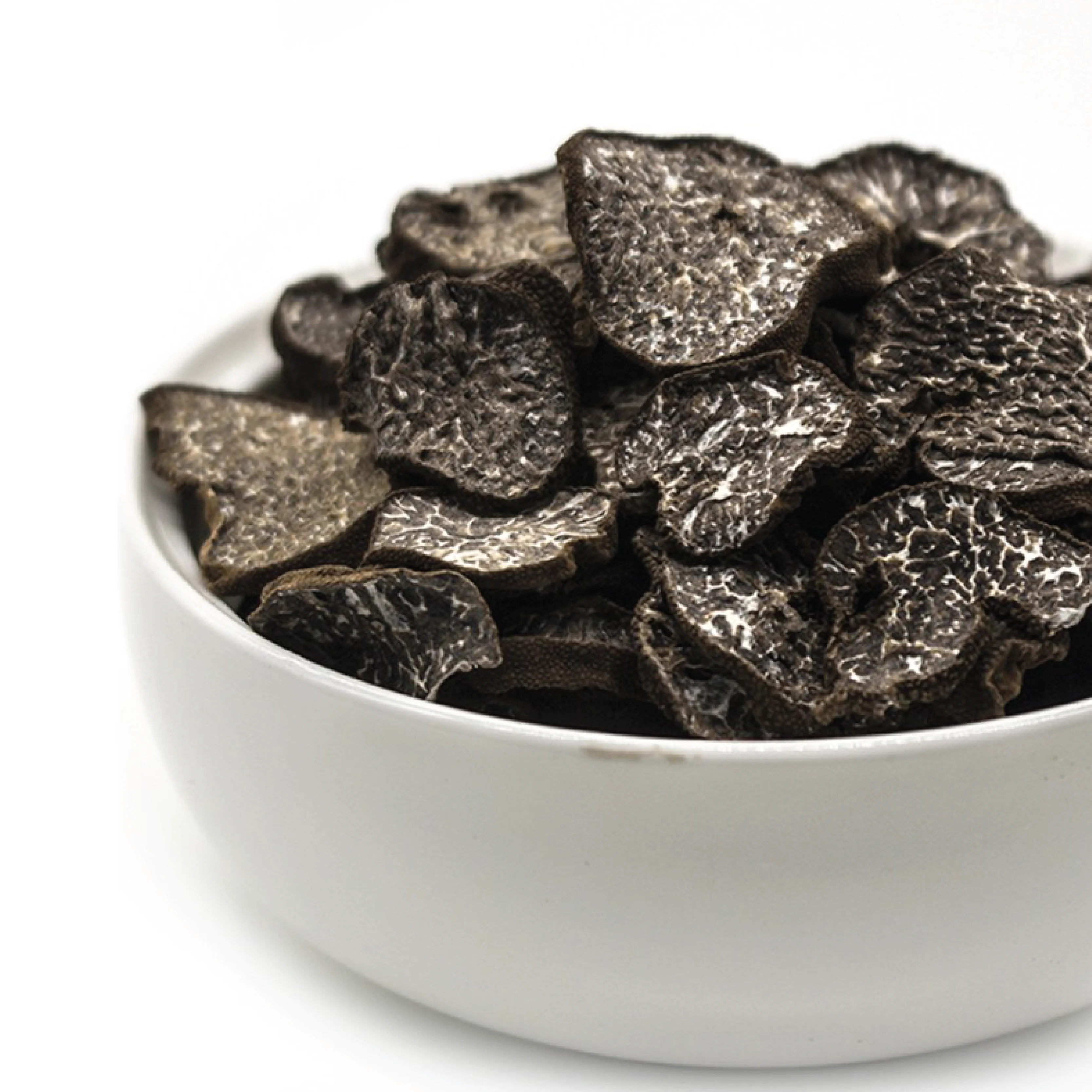
Authentic Black Périgord Truffle Origins and Terroir Requirements
Why True Tuber melanosporum Depends on Dordogne’s Limestone, Oak/Hazel Hosts, and Microclimate
True Tuber melanosporum is an ectomycorrhizal fungus that cannot complete its life cycle without compatible host roots. In Dordogne’s Périgord Noir—its historic and most reliable habitat—holm oak (Quercus ilex), downy oak (Quercus pubescens), and hazelnut (Corylus avellana) sustain the underground mycelial network essential for ascocarp formation. The region’s limestone plateau provides alkaline, free-draining soil with high calcium carbonate content (pH 7.5–8.3), a chemistry that suppresses competing fungi and maintains root-zone aeration. Microclimate completes the triad: summer drought slows host vigour just enough to redirect energy underground; timely autumn rains rehydrate the soil and trigger fruiting; and sustained cool winter temperatures cue ascocarp maturation. Growers monitor the ‘brûlé’—a bare zone around infected trees where herbaceous cover recedes—as a visible sign of active mycorrhization. For buyers, authentic sourcing must begin with verifiable terroir evidence—not just a geographic label—but documented soil pH, confirmed host species, and drainage history. Acidic, heavy clay, or poorly drained soils rarely yield mature, aromatic truffles. Consequently, orchard management in Périgord often includes targeted limestone amendment, precision irrigation, and root pruning to encourage shallow, horizontal root development where truffles form.
Global Supply Comparison: PDO France vs. Spain (Teruel), Croatia, and Emerging Producers
France’s PDO Périgord noir black truffle remains the global sensory benchmark, harvested November–March under strict terroir-linked regulations. Spain’s Teruel region—built on high-altitude calcareous soils and holm oak—now supplies larger, export-ready volumes. While quality approaches French standards, aroma intensity can decline during warmer autumns due to accelerated ripening and shorter post-harvest stability. Croatia’s Istrian karst yields small, aromatic lots at lower cost, but grading consistency and traceability infrastructure remain less developed. Emerging producers in Australia, Chile, and the United States lime soils, inoculate oak or hazelnut seedlings, and increasingly meet export-grade thresholds—but batch-to-batch variability persists. Importers relying solely on origin labels risk receiving low-aroma or mislabeled lots. Objective proof—not country of origin—is decisive: harvest date, measured soil pH, verified host species, and uninterrupted cold chain documentation are non-negotiable for consistent quality.
Verifying Black Périgord Truffle Authenticity and Detecting Adulteration
Morphological & Sensory Authentication: Verrucae, Aroma Volatility, and Texture Signatures
Authentic black Périgord truffles display a deep purplish-black gleba veined with fine, white, branching hyphae. The peridium bears distinct pyramidal verrucae—small, faceted warts that feel firm but not brittle to gentle pressure. Aroma is the most dynamic and telling indicator: it opens with damp earth, roasted cocoa, and a subtle garlic nuance, then gradually fades as moisture evaporates. An overpowering, flat, or synthetic scent signals degradation, oil treatment, or adulteration. Texture is equally diagnostic: premium T. melanosporum resists light pressure and yields with a crisp snap—not sponginess, wetness, or collapse. Graders also examine soil trapped in surface crevices, as mineral fingerprinting can support geographic claims. In high-value transactions, sensory evaluation is now routinely augmented by PCR-RFLP (polymerase chain reaction–restriction fragment length polymorphism) and next-generation sequencing—molecular tools that reduce reliance on subjective visual assessment and improve confidence in species identity, especially for processed or blended lots.
Red Flags in Commercial Supply: Oil Treatment, Chinese Tuber indicum Substitution, and Hybrid Ambiguity
Oil treatment is a common early red flag: some suppliers brush truffles with neutral oil to add weight and restore superficial sheen. This leaves a slippery film, clogs the peridium, impedes gas exchange, and accelerates internal decay. More serious is substitution with Chinese Tuber indicum, which shares a black exterior but features a coarser, less aromatic gleba, broader spores, and weaker volatile profiles. A 2019 MALDI-TOF mass spectrometry survey found 26% misidentification across commercial truffle samples (Nature, 2019). Hybrid ambiguity further complicates verification when mixed or processed lots blur species boundaries. Synthetic aroma injection—particularly with bis(methylthio)methane, a compound legally permitted as a flavoring—can mask aged, bland, or mislabeled product. Isotope-ratio mass spectrometry distinguishes naturally occurring aroma compounds from synthetic analogues, while targeted PCR and next-generation sequencing detect adulterants at sub-1% levels. Buyers should demand batch-level DNA certification and reject any lot lacking clear species identification, harvest date, and full cold-chain records.
Objective Grading, Freshness Assessment, and Import-Ready Traceability
Physical Grading Criteria: Firmness, Surface Integrity, Mold Thresholds, and Weight-to-Size Ratios
Black Périgord truffle grading must be objective, repeatable, and aligned with EU wholesale norms. Soft spots indicate internal decay and are grounds for rejection. Surface integrity is critical: peridium cracks exceeding 3 mm expose the gleba to oxidation and microbial contamination. EU guidelines set a maximum threshold of 5% surface mold (2023); visible mycelium or bacterial slime indicates spoilage. Weight-to-size ratio serves as a proxy for density and freshness—a 50 mm truffle weighing under 20 g is likely desiccated or hollow-hearted.
| Criterion | Acceptable range | Downgrade or reject |
|---|---|---|
| Firmness | Dense, lightly elastic | Soft, watery, collapsed |
| Surface integrity | Intact peridium, defined verrucae | Cracks > 3 mm, exposed gleba |
| Mold threshold | ≤ 5% surface mold | Visible mycelium or bacterial slime |
| Weight-to-size | 50 mm truffle ≥ 20 g | Hollow heart, low density |
Cold Chain Compliance and Harvest Date Transparency as Non-Negotiable for EU/US Importers
Fresh Tuber melanosporum requires strict temperature control: 0–4°C with 90–95% relative humidity from harvest through final inspection. A single excursion above 6°C accelerates volatile loss and reduces shelf life to under seven days. Insulated packaging with phase-change materials—not dry ice—is preferred, as freezing ruptures cell walls and degrades texture and aroma. Buyers must require time-stamped cold chain logs and harvest date printed on each lot label. EU and US importers increasingly refuse shipments lacking this documentation, as post-harvest age directly determines grading, pricing, and regulatory clearance (2024). This discipline protects margins, ensures compliance, and prevents costly border detention or rejection.
FAQs
What are the key requirements for growing authentic Périgord truffles?
Authentic Périgord truffle production depends on alkaline, free-draining limestone soils, suitable host trees like oak or hazelnut, and a Mediterranean-like microclimate with summer droughts and autumn rains.
How can I verify the authenticity of a black Périgord truffle?
Look for morphological signs such as pyramidal verrucae, fine white hyphae in the gleba, and a firm texture. For more advanced verification, DNA testing and next-generation sequencing are reliable methods.
What are common signs of black truffle adulteration?
Common signs include oil treatments, substitution with Chinese Tuber indicum, synthetic aroma injections, and mislabeled or poorly documented batches.
Why is cold chain compliance essential for black truffle imports?
Cold chain compliance ensures temperature and humidity control (0-4°C with 90-95% RH), which preserve freshness, aroma, and texture from harvest to customer delivery.