 EN

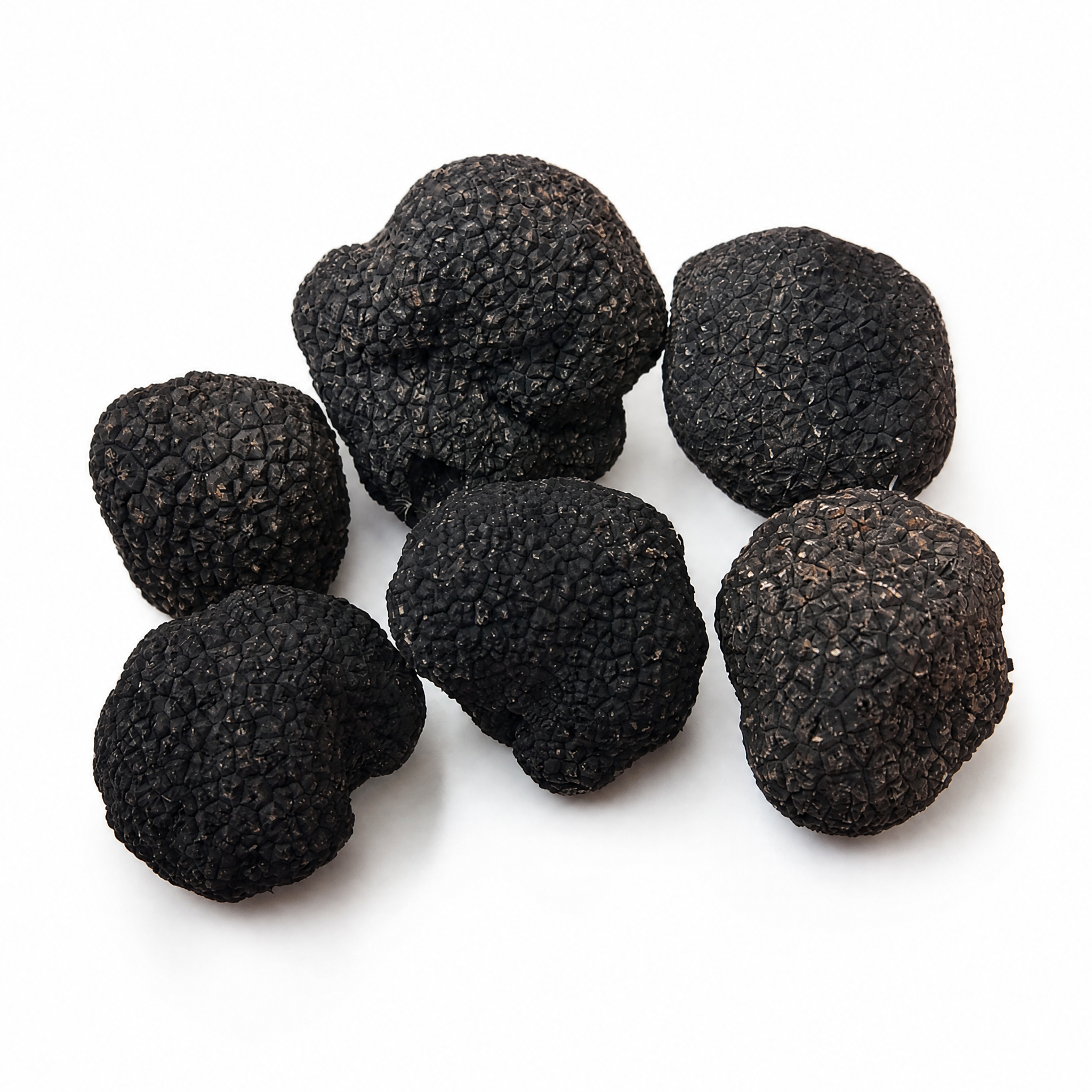
Black Truffle Price Drivers: Seasonality, Origin, and Harvest Volatility
How Seasonal Availability and Regional Harvest Yields Directly Influence Black Truffle Price
Black truffle price responds sharply to harvest calendars. European black winter truffles—especially the Périgord variety—peak from November to March, with February typically delivering the highest proportion of mature, market-ready specimens. Early-season lots (November–December) often include underripe truffles, reducing usable yield per kilogram; by February, 70–80% of field batches meet fresh-sale standards. A 2025 market analysis reports spot prices near USD 400 per pound during this core season—but weekly quotes still fluctuate with localized weather. Truffles require free-draining, calcareous soils at pH 7.5–8.0; prolonged winter rain on poorly drained ground suppresses yields, while a warm, dry autumn followed by moderate moisture can lift volumes and soften spot quotes. Frost or heavy rain in key zones (e.g., France’s Dordogne, Italy’s Umbria) triggers demand for preserved or Southern Hemisphere alternatives, adding logistics cost and premium pressure. Procurement teams should monitor regional harvest reports—not lock into a single origin—to navigate volatility and avoid inflated effective cost per usable gram.
The Role of Origin Certification (e.g., Périgord DOP) and Traceability in Premium Black Truffle Price Justification
Origin certification transforms price evaluation from commodity speculation to quality assurance. A Périgord DOP (Protected Designation of Origin) label guarantees harvest within a defined zone of southwest France, adherence to seasonal windows, and permitted cultivation practices. That traceability mitigates substitution risk—particularly of lower-aroma summer truffles or frozen imports—and supports consistent kitchen yield. Wholesale lots with full lot-level traceability (including harvest date, commune, and handler records) command 15–30% premiums over uncertified, mixed-origin batches. In contrast, anonymous bulk shipments often carry unknown post-harvest age, frost exposure, or moisture variability—factors that increase trim waste and depress usable grams. For high-end foodservice and premium manufacturers, paying more upfront for verified origin lowers total recipe cost per finished dish and prevents menu gaps during peak winter demand. Certified supply functions as a quality hedge—not just a marketing surcharge—by anchoring aroma consistency, portion accuracy, and shelf-life predictability.
Grading Standards and Their Real-World Impact on Black Truffle Price per Gram
Grading standards translate quoted price into measurable weight, aroma intensity, and defect limits. Without them, a low headline figure can mask unusable material.
Decoding Extra, Grade I, and Grade II: Weight, Aroma Intensity, and Defect Tolerance Thresholds
Commercial grades are defined by objective thresholds—not marketing terms. Extra grade requires 20–60 g size, uniform shape, zero cuts or bruising, and powerful, persistent aroma. It represents only ~3% of total harvest and trades at €2.0–5.0 per gram (2024 wholesale). Grade I spans 15–100 g, permits minor shape deviations and occasional surface marks, and retains strong—but slightly less intense—aroma, priced at €1.2–2.5/g. Grade II includes smaller or irregular pieces (often 10–20 g), allows visible scars and higher soil tolerance, and shows shorter aroma persistence, trading at €0.6–1.2/g. Size alone doesn’t guarantee potency. Buyers must specify written defect tolerances: maximum allowable percentages for cuts, softness, insect damage, or size-band deviation. Without that, a “Grade II” label has no contractual value. Suppliers should also declare whether mixed maturity is permitted—otherwise, receiving inspection cannot fairly assess off-spec deliveries.
Why Grade Selection Dictates Yield Efficiency—and How It Changes Your Effective Black Truffle Price
Grade selection reshapes effective cost because nominal price per gram hides yield losses. Extra grade may cost €3–5/g, but its sound, whole pieces typically yield >90% after cleaning. Grade II at €0.8/g can lose 15–25% to trimming, soft spots, or larval channels—pushing usable cost to €1.0–1.1/g. If lower-grade aroma is less concentrated, recipes may require 30–40% more weight to achieve target flavor—erasing the sticker-price advantage. Effective price per usable gram equals nominal price divided by edible yield. Contracts should tie pricing to grade, size range, and maximum defect percentage—not vague labels. Hidden inclusions like soil or undersized fragments further inflate waste. For stable plate cost, always request a worked yield example before finalizing purchase terms.
Supplier Evaluation: Verifying Freshness, Authenticity, and Consistency Beyond the Label
Before accepting a bulk lot, procurement teams must verify that condition matches documentation and grade claims. A short, structured receiving checklist removes subjective bias from acceptance decisions.
Sensory Quality Control for Bulk Orders: Objective Smell, Firmness, and Visual Cues That Predict Shelf Life
Conduct sensory checks at receiving—not after cold storage. Smell must be earthy and faintly garlicky, with no ammonia, sour, or alcoholic notes. Firmness should feel dense yet resilient; spongy or rock-hard specimens signal poor aging potential. Cross-cut samples from multiple cases must show clean white-to-beige marbling, dry exterior, and no slime or weeping. Moisture beading indicates prior condensation and shortened shelf life. Lots passing these objective tests deliver longer usable windows; failures force accelerated processing, trimming, or replacement—raising effective cost per usable gram. Define pass-fail thresholds for aroma, texture, and marbling, photograph representative samples, and use a laminated receiving card so all warehouse staff apply identical standards.
Red Flags in Bulk Shipments: Frost Damage, Larval Infestation, and Moisture Loss That Inflate Waste and Depress ROI
Reject poor lots at the dock—this protects margin more effectively than renegotiation later. Three defects reliably predict heavy trim loss and rapid spoilage:
- Frost damage: darkened, water-soaked patches or soft pitting after thaw indicate cell rupture and early decay.
- Larval infestation: pinholes, fine frass, or small exit holes reveal internal feeding—and potential live insects in the case.
- Moisture loss: shriveled, leathery skin or unusually light, rattling truffles signal dehydration that degrades aroma yield and usable weight.
Each increases waste and labor, raising real cost per gram—even if the invoice looks favorable. Document defects with timestamped photos and temperature logs before contacting the supplier for return or credit. Consistent rejection of these red flags incentivizes better grading and safeguards your receiving margin.
Strategic Procurement: Aligning Contracts, Timing, and Logistics to Stabilize Black Truffle Price
Wholesale buyers can reduce black truffle price volatility by aligning three levers: pre-harvest contracting, seasonal timing, and cold-chain logistics. Spot purchasing exposes buyers to price swings of 40–60% within a single harvest window (industry trade data, 2023); structured procurement narrows that range significantly.
Start with timing. Supplier allocation decisions occur 8–12 weeks before regional harvest peaks. Buyers who commit during this window secure preferred grade access, larger fruit sizes, and volume guarantees—avoiding last-minute premiums when yields fall short.
Contract design matters equally. Fixed-price agreements offer budget certainty but risk overpayment if harvests exceed expectations. A hybrid model—such as a ±15% floor-ceiling around an agreed base price, indexed to graded wholesale benchmarks—shares risk more fairly while keeping effective price predictable.
Logistics completes the strategy. Fresh black truffles require storage at 2–4°C with high humidity and transit from harvest to cold-room receiving in under 48 hours. Delays or temperature abuse accelerate moisture loss and aroma degradation—raising cost per usable gram. Require temperature loggers, reject warm or thawed arrivals, and schedule deliveries to match processing or menu demand.
| Procurement model | Price stability | Access to top grades | Main risk |
|---|---|---|---|
| Spot buying | Low | Variable | High exposure to harvest shocks |
| Fixed-price contract | High | Moderate if early | Overpayment if market falls |
| Hybrid price band | Moderate–high | High | Administrative complexity |
FAQs About Black Truffle Price Drivers
What factors influence black truffle prices the most?
Seasonality, origin certification, regional harvest yields, grading standards, and sourcing strategies are key factors that drive black truffle prices.
How does seasonality affect black truffle pricing?
Seasonality directly impacts pricing due to peak harvest periods. For example, mature black winter truffles are most available from November to March, causing fluctuations based on supply quality and local weather conditions.
Why is traceability important in black truffle sourcing?
Traceability ensures authenticity and quality assurance by verifying origin, harvest practices, and handling records. Certified lots offer more consistent aroma and yield, reducing waste.
What is the difference between Extra, Grade I, and Grade II truffles?
Extra grade truffles have stringent standards for size, aroma, and defects, representing top quality. Grade I allows minor surface deviations but retains strong aroma. Grade II includes irregular or smaller pieces with lower aroma persistence, and higher defect tolerance.
How can procurement strategies reduce price volatility?
Structured contracts, pre-harvest agreements, and robust cold-chain logistics stabilize prices by securing supply, minimizing waste, and narrowing exposure to market fluctuations.
What are the key quality control measures for receiving bulk truffles?
Buyers should perform sensory checks for aroma, firmness, and visual cleanliness, while rejecting lots with frost damage, larval infestation, or moisture loss that inflate waste and reduce ROI.
Table of Contents
-
Black Truffle Price Drivers: Seasonality, Origin, and Harvest Volatility
- How Seasonal Availability and Regional Harvest Yields Directly Influence Black Truffle Price
- The Role of Origin Certification (e.g., Périgord DOP) and Traceability in Premium Black Truffle Price Justification
- Grading Standards and Their Real-World Impact on Black Truffle Price per Gram
- Supplier Evaluation: Verifying Freshness, Authenticity, and Consistency Beyond the Label
- Strategic Procurement: Aligning Contracts, Timing, and Logistics to Stabilize Black Truffle Price
-
FAQs About Black Truffle Price Drivers
- What factors influence black truffle prices the most?
- How does seasonality affect black truffle pricing?
- Why is traceability important in black truffle sourcing?
- What is the difference between Extra, Grade I, and Grade II truffles?
- How can procurement strategies reduce price volatility?
- What are the key quality control measures for receiving bulk truffles?