 EN

Understanding Truffle Quality: Grading, Varietal Traits, and Regulatory Realities
Aroma Intensity as the Primary Quality Determinant in Commercial Grading
Commercial grading systems used by importers and professional buyers classify fresh truffles into tiers based on aroma, firmness, freshness, interior maturity, shape, and exterior condition. Within the same species, two specimens harvested from the same forest on the same morning can carry very different prices—because aroma intensity is the primary commercial determinant. A strong, complex aroma commands a premium in fine-dining service, while a weak or immature aroma lowers grade even if the exterior looks intact. This is why truffle value behaves more like a specialty seafood catch or a fine-wine harvest than a uniform agricultural commodity.
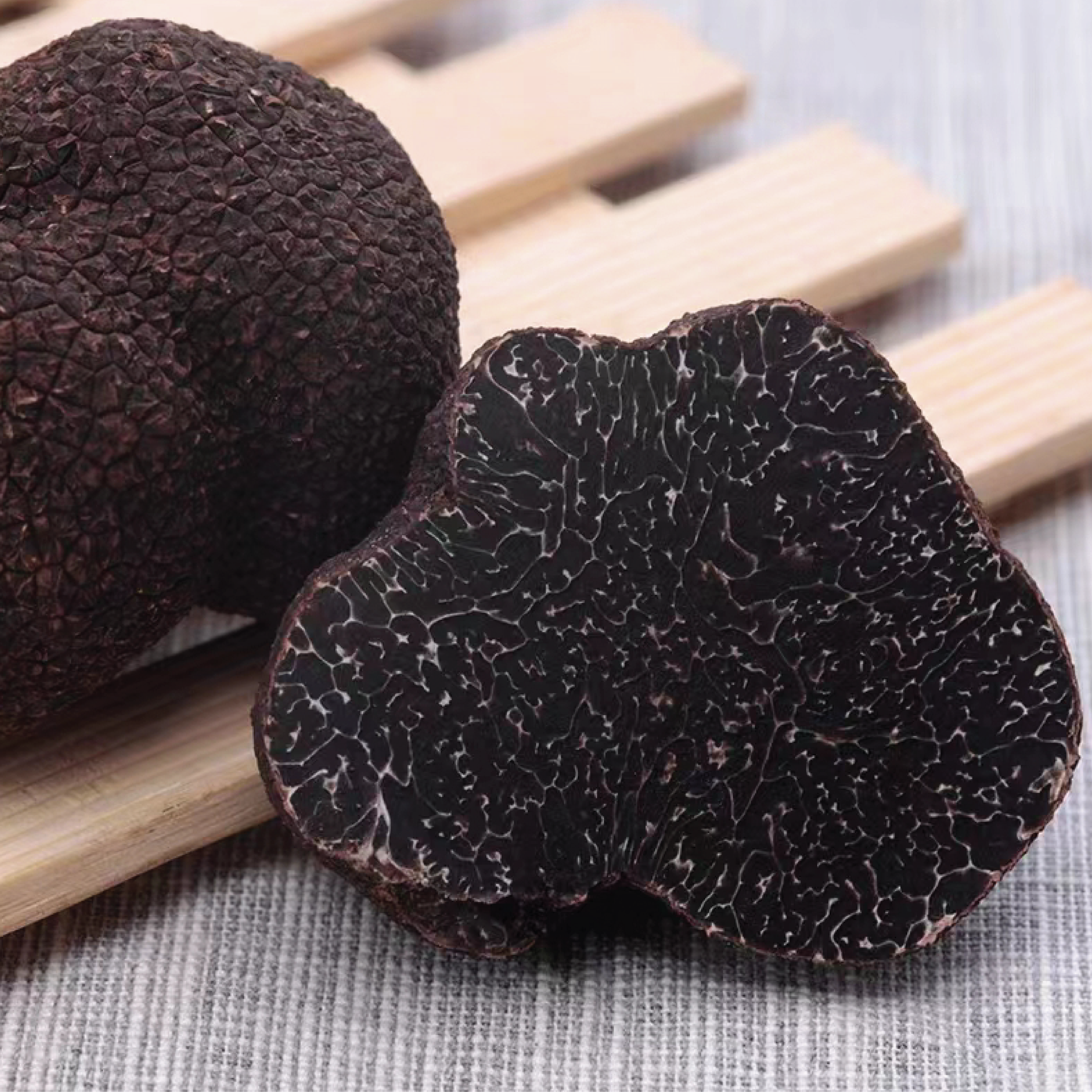
Experienced buyers assess interior maturity by checking firmness, weight density, aroma release, and—when appropriate—the marbling pattern of the gleba when cut. An underdeveloped truffle may have a simpler, weaker aroma and deliver less impact during cooking or shaving. For black winter truffles (Tuber melanosporum), depth and complexity during cooking are closely tied to internal maturity at the time of grading. Aroma therefore sets the quality ceiling before texture or shape are considered. Commercial grades such as “Extra” and “Prima” translate these subtle differences into a clearer buying signal—but they do not override the foundational role of aroma.
Texture, Appearance, and Seasonality Differences Between Tuber melanosporum and Tuber aestivum
Species sets the ceiling on aromatic potential—and that ceiling differs sharply between the two most commercially significant black truffles. Tuber melanosporum, the black winter truffle, is typically harvested from November to March. It has a dark, coarsely warted peridium, firm flesh, and tight white-to-cream marbling. Its aroma is intense, with earthy, cocoa, and forest-floor notes. Tuber aestivum, the summer truffle, appears from May to August and offers a milder, nutty, mushroom-like profile. Its exterior is less deeply textured, and its gleba is often paler with more open veining.
Texture also differs: winter truffles tend to be denser and hold aroma better during gentle heat, while summer truffles are usually shaved raw or added late to avoid losing their lighter aromatics. Seasonality shifts with provenance and altitude, so wholesale buyers should verify harvest dates and species—not rely on color or shape alone. No amount of grading can make Tuber aestivum perform like Tuber melanosporum.
Why 'Extra' and 'Prima' Labels Lack Harmonized EU/US Definitions—and What Buyers Should Verify Instead
Terms such as “Extra” and “Prima” are common in the truffle trade, but they are not harmonized across the EU or the United States. One supplier’s “Extra” may allow more surface defects or weaker aroma than another’s. As a result, wholesale truffle buyers should not rely on grade labels alone. Instead, request a written specification that states species, maturity, aroma intensity, firmness, acceptable shape, defect limits, and whether weight is measured before or after cleaning.
The intended use matters: whole, regular pieces are required for tableside shaving, while sound irregular pieces can work for sauces, butter, or controlled garnish. Ask for lot-level documentation and arrival-temperature evidence. A clear specification gives receiving staff an objective basis for acceptance and protects against vague commercial terms. Because no universal standard defines “Extra” or “Prima,” the written spec becomes the only enforceable quality agreement.
Ensuring Truffle Authenticity: Detecting Substitutions, Adulteration, and Pricing Red Flags
Common Fraud Tactics: Tuber indicum and Other Lookalikes Masquerading as Premium Truffles
The most frequent substitution replaces Tuber melanosporum with Tuber indicum, a lower-cost Asian lookalike. The two species share dark, warty exteriors, but Tuber indicum has a weaker, less complex aroma and a firmer, less marbled interior. Unscrupulous middlemen may mix species, pass off immature specimens, or sell waterlogged lots as premium truffles. Lower-grade Tuber aestivum also sometimes appears as winter black truffle when seasonal supply tightens.
A 2022 analysis of 51 commercial truffle products found only 20% were correctly labeled—demonstrating how widespread misrepresentation has become. Pricing below the seasonal market range is a red flag, but high price alone does not guarantee authenticity. Ask the supplier for species-level identification. For high-value orders, request DNA or stable-isotope verification. Any sharp, unpleasant odor, excessive moisture, or unusually firm texture should trigger rejection. Do not rely on visual inspection alone; lookalikes can pass casual checks. Laboratory methods can reliably distinguish commercially important truffle species, including Tuber indicum. Consider independent testing when the invoice value is high.
Transparency Essentials: Minimum Truffle Content %, Ingredient Disclosure, and Required Wholesaler Documentation
Wholesale buyers should reject labels that list only “truffle” or “truffle preparation.” Ask for the botanical name—such as Tuber melanosporum or Tuber magnatum. For processed truffle products, the percentage content must be clearly stated; 1–5% real truffle is common in oils and sauces, but it must appear on the label.
For fresh truffles, request the following documents before payment:
- Harvest date and batch description
- Country and region of origin
- Storage temperature and humidity logs
- Certificates or laboratory authentication for high-value lots
- Return or replacement terms for spoilage
A reliable supplier knows every truffle lot and can provide this information without delay. If a wholesaler cannot document origin, harvest timing, or cold-chain handling, treat the lot as high risk. Consistent paperwork reduces substitution and spoilage losses.
Optimizing Truffle Packaging and Cold-Chain Logistics for Wholesale Freshness
For wholesale buyers, packaging and cold-chain decisions directly determine whether fresh truffles arrive with intact aroma—or as a costly loss. Two packaging approaches dominate modern distribution: modified-atmosphere packaging (MAP) and microperforated films. The right choice depends on truffle variety, transit time, and destination humidity.
Temperature-Controlled Packaging: Modified-Atmosphere vs. Microperforated Films by Truffle Variety and Destination Market
MAP restricts oxygen and regulates CO₂, which slows respiration and helps preserve Tuber melanosporum on long-haul routes. Microperforated films allow passive gas exchange and often suit Tuber aestivum or shorter regional deliveries where aroma release matters more than extended shelf life. Recent cold-chain research shows relative humidity of 90–95% and temperature variance within ±1°C prevent texture damage during cross-climate transit. For humid markets, packaging with hygroscopic buffers absorbs condensation; for long air freight, phase-change materials keep product near 4–6°C. The table below summarizes practical selection criteria.
| Packaging type | Best fit | Gas exchange behavior | Typical route |
|---|---|---|---|
| Modified-atmosphere packaging | Tuber melanosporum, premium long-haul | Reduced O₂, controlled CO₂ | >48 hours, air freight |
| Microperforated films | Tuber aestivum, regional fresh sales | Passive O₂/CO₂ exchange | <24 hours, high-humidity climates |
The Critical 72-Hour Window: How Shelf Life Declines Sharply Above 2°C
FAO 2023 data show that fresh truffles stored above 2°C can lose marketable quality within 72 hours. Respiration accelerates, volatile aroma compounds dissipate, and surface moisture invites spoilage. Best practice starts at harvest: pre-cool truffles within two hours, keep storage at 0–2°C with ±1°C variance, and avoid ethylene-producing cargo during transit. Humidity should stay near 90–95% relative humidity, while oxygen scavengers or nitrogen flushing can further slow enzyme breakdown. Logistics teams should treat the first 72 hours as the critical control window—not a suggestion. Without this discipline, even high-grade truffles arrive bland and soft, eroding wholesale margins.
Frequently Asked Questions (FAQ)
What factors determine the commercial quality of truffles?
Commercial truffle quality is determined by aroma intensity, firmness, freshness, interior maturity, shape, exterior condition, and species. Among these, aroma intensity is the primary factor.
What is the difference between Tuber melanosporum and Tuber aestivum?
Tuber melanosporum (black winter truffle) has an intense earthy and cocoa aroma, firm texture, and tight marbling. Tuber aestivum (summer truffle) has a milder nutty aroma, less dense texture, and paler gleba.
Why are labels like "Extra" and "Prima" unreliable?
These labels lack harmonized definitions in the EU and US. Buyers should rely on written specifications that outline species, aroma intensity, maturity, and defect tolerances instead.
How can buyers ensure truffle authenticity?
Buyers should request species identification, DNA or stable-isotope verification for high-value orders, and check for documentation like harvest date, origin, and storage conditions. Avoid truffles with unpleasant odors, excessive moisture, or low prices.
What are the best practices for truffle packaging and storage?
Truffles should be pre-cooled within 2 hours of harvest, stored at 0–2°C with 90–95% humidity. Modified-atmosphere packaging suits long-haul shipments, while microperforated films are better for short-distance deliveries to humid regions.