 EN
EN

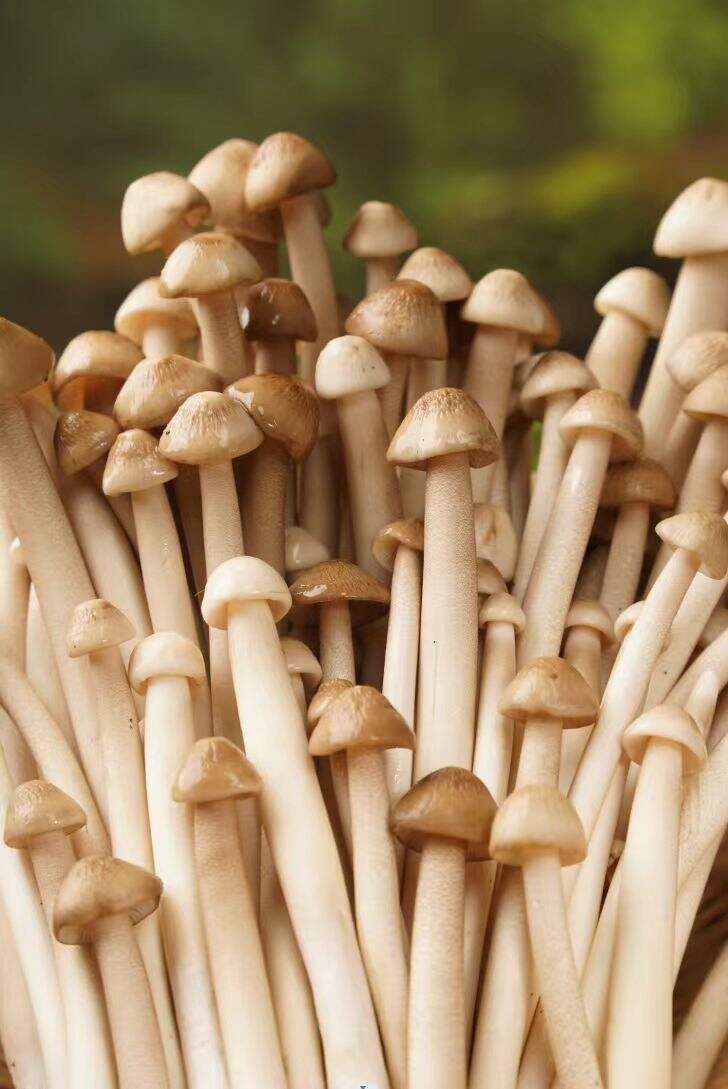
Geographic and Cultural Origins of Authentic White Termite Mushroom
Native habitats and endemic regions: Malaysia, Thailand, and West Africa
The Authentic White Termite Mushroom (Termitomyces spp.) can only be found growing in tropical areas because it needs to live alongside termite colonies in a special kind of partnership. These mushrooms do best in the damp forests of Southeast Asia, especially around Malaysia and Thailand, as well as certain parts of West Africa like southern Nigeria and Benin. They actually depend on living inside active termite mounds where their fungal threads help break down stuff in the soil, providing food for the termites themselves. Because of this close connection with termites, people can only collect them from nature and not grow them elsewhere. Harvesting happens at specific times of year, usually when there's lots of rain during the monsoons. Most of what gets sold worldwide comes from these original growing spots, but changing weather patterns are making it harder to predict how much will be available in the future.
Local names as authenticity signals (e.g., 'cendawan anai-anai', 'kulat taun')
The way different regions name things gives important clues about what something really is, especially when trying to spot authentic White Termite Mushrooms. Down in Malaysia, folks only call them cendawan anai-anai, which literally means termite mushroom. Across Thailand, local gatherers refer to them as kulat taun. In West Africa, there are all sorts of regional names passed down through families who've been collecting these mushrooms for ages. The Yoruba people in Nigeria say osusu, while those speaking Fon in Benin know them as ojiko. These traditional names aren't just labels they serve as protectors of culture, keeping alive knowledge that has survived many generations of foragers.
- Sellers using correct local names typically possess indigenous harvesting expertise
- Generic labels like “wild mushroom” often signal substitution or misidentification
- Documenting etymological roots supports traceability and strengthens biocultural heritage
The persistence of these vernacular terms underscores their role in preserving ecological knowledge and resisting commercial dilution.
Biological Reality: Why True White Termite Mushroom Cannot Be Cultivated
Obligate symbiosis with termite mounds — ecological dependency explained
The White Termite Mushroom’s survival hinges entirely on its mutualistic relationship with termite colonies—a biological lock that defies cultivation. It grows only within the microclimate of active termite mounds, where insects provide:
- Pre-digested plant matter as growth substrate
- Precisely regulated humidity (85–90%) and temperature (~30°C)
- Protection from competing fungi via antibiotic secretions
Termites actually grow these special mushrooms as their main food supply, creating this unique relationship that just doesn't work when taken out of their natural environment. Researchers have been studying this phenomenon for years now, including some tests conducted at the Malaysian Agricultural Research and Development Institute, but nobody has managed to successfully cultivate these mushrooms anywhere else. There's something about how the different species communicate chemically that simply won't happen in lab conditions or greenhouses. That means if someone wants real specimens of these mushrooms, they need to find them right where termite colonies are living in the wild.
Taxonomic clarity: Confirming Termitomyces clypeatus and related species
True White Termite Mushrooms belong specifically to the Termitomyces genus, with Termitomyces clypeatus being the predominant culinary species. Identification requires verifying these key traits:
| Characteristic | T. clypeatus | Common Imposters |
|---|---|---|
| Cap | Ivory-white, 5–12 cm diameter, convex with fine radial grooves | Yellowish tint, irregular shape, or scaly surface |
| Stipe | Central, solid, with root-like pseudorhiza fused to mound substrate | Fragile, off-center, hollow, or lacking pseudorhiza |
| Spores | Smooth, elliptical print (7–9 μm) | Wrinkled, larger (>12 μm), or irregularly shaped |
Related species such as Termitomyces microcarpus lack the prized umami depth and texture, while toxic lookalikes—including Leucocoprinus birnbaumii—pose severe gastrointestinal risks. DNA barcoding remains the gold standard for verification, especially when sourcing from non-endemic regions where misidentification rates exceed 40%.
Harvesting Evidence: Seasonality, Wild Collection, and Supply Limitations
The White Termite Mushroom only grows at certain times of year, following the rain patterns across Southeast Asia and West Africa. In places like Thailand and Malaysia, these mushrooms pop up mainly between June and September when the monsoons hit hard. Down in southern Nigeria, folks see them from July all the way to October as termite colonies get busy. The catch is that foragers need to act fast once it rains. There's really just about two days after the caps open up completely where they can be collected before everything starts breaking down or getting eaten by insects. Combine this short harvesting period with the fact that no one has figured out how to grow these mushrooms artificially, and it makes sense why there's always limited supply. During dry seasons, stores often run out of stock by 60% to 80%, which explains why prices swing so much throughout the year. Finding these mushrooms takes serious skill too. Trained collectors spend hours searching for active termite mounds, carefully extracting each specimen without damaging them. Because of all this work involved, genuine White Termite Mushrooms come with a hefty price tag regardless of season. Good suppliers usually offer documentation showing exactly where and when their mushrooms were harvested, helping buyers know what they're actually paying for.
Practical Identification: Distinguishing Authentic White Termite Mushroom from Lookalikes
Key morphological markers: cap texture, stipe structure, and spore print
The real deal when it comes to White Termite Mushrooms can be spotted by looking at specific features. The cap ranges between 2 to 8 centimeters across and stays smooth and dry throughout, always keeping that ivory white color without any scaling, cracking, or discoloration spots. When young, the cap starts off rounded but flattens out as the mushroom matures. Looking down at the stem reveals another clue - it's straight in the middle, never hollow inside, has subtle ridges running along it, and gets narrower towards the bottom where it connects directly to the termite mound substrate through what mycologists call a pseudorhiza. For those who want to confirm authenticity in the field, checking spore prints works wonders. Real specimens will leave behind creamy white spores after just 4 to 6 hours. Getting these details right matters a lot because mixing up similar looking mushrooms leads to serious problems. According to research published in the Journal of Ethnomycology last year, there are over 200 reported poisoning incidents worldwide each year caused by mistaken identity.
Common toxic lookalikes and associated poisoning risks
A number of mushrooms out there pretend to be the White Termite Mushroom, sometimes with serious health repercussions. Take Amanita ocreata for instance, which has that similar pale colored cap but hides some lethal secrets underneath. Look closely at the stem base where those paper-like remains of the volva can be found, plus the gills are completely free from attachment points. Then there's Clitocybe dealbata growing in fields rather than termite colonies, sporting much thinner gills packed closer together than what we see in genuine specimens. Eating these imposters can lead to all sorts of problems ranging from stomach issues to far worse complications depending on how much was consumed.
| Feature | Authentic White Termite Mushroom | Toxic Imposters |
|---|---|---|
| Cap attachment | Fused to substrate via pseudorhiza | Loose, free, or absent |
| Gill structure | Decurrent, evenly spaced (1–2 mm apart) | Crowded (<1 mm) or free |
| Toxin effects | Non-toxic | Neurotoxins (e.g., muscarine) causing vomiting within 30 minutes, potential organ failure |
Always verify termite mound origins, confirm spore color and morphology, and consult trained mycologists before consumption—especially when foraging outside endemic regions.
FAQ
What regions are native to the White Termite Mushroom?
The mushroom is native to Malaysia, Thailand, and parts of West Africa.
Are there any other names for the White Termite Mushroom?
Yes, in Malaysia it's known as cendawan anai-anai, in Thailand as kulat taun, and in Nigeria as osusu by the Yoruba people.
Why can't the White Termite Mushroom be cultivated?
It requires a unique symbiotic relationship with termites that cannot be replicated outside natural termite mounds.
How can you identify an authentic White Termite Mushroom?
Look for specific traits like the ivory-white cap, stipe structure, and creamy white spore print.
What are the risks of mistaking lookalikes for White Termite Mushrooms?
Consuming imposters can lead to severe health issues due to toxic effects like vomiting and potential organ failure.