 EN
EN

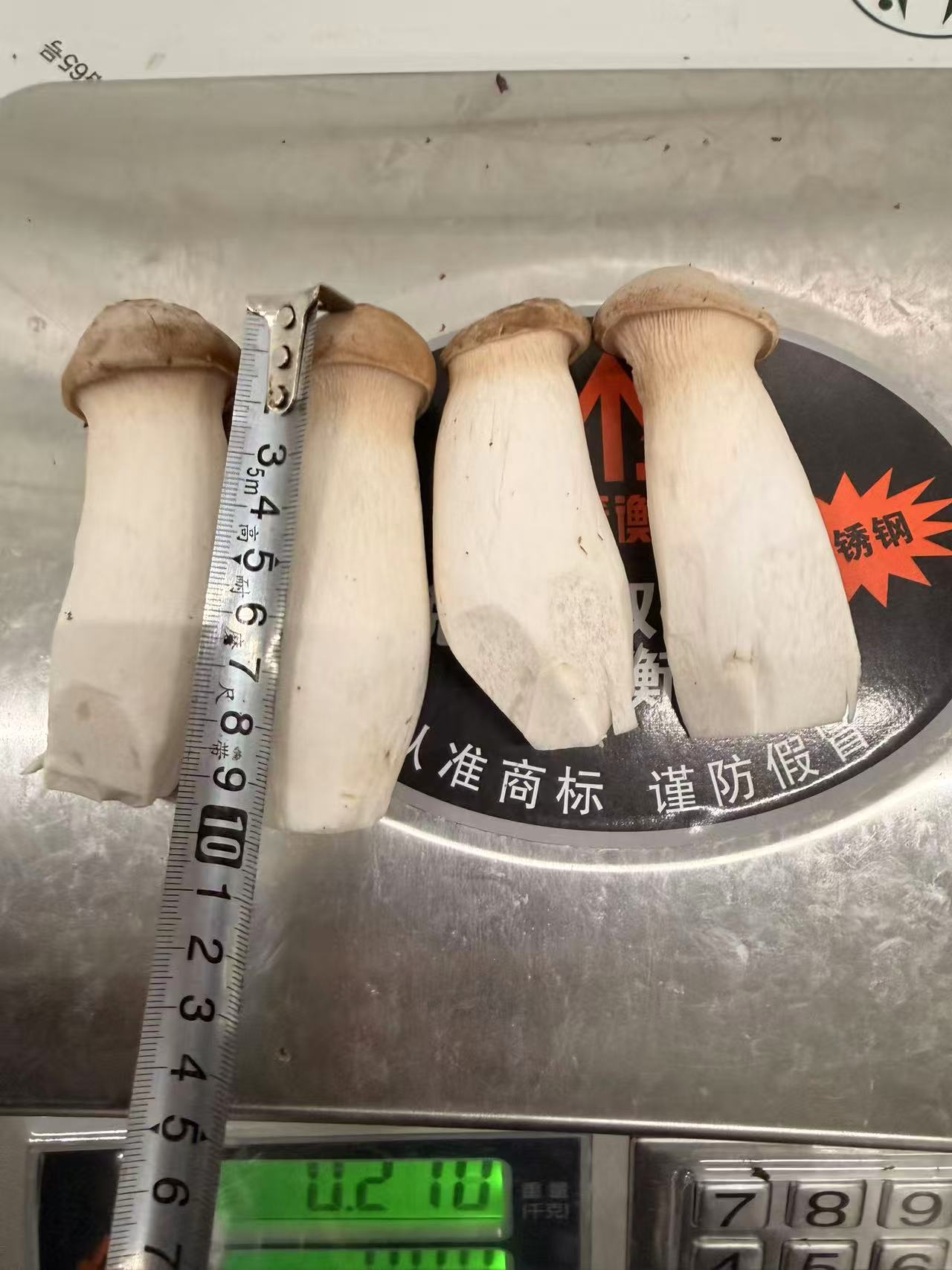
Real Export Shipment Failure Case Reveals King Oyster Mushroom Short Shelf Life Bottleneck
Our overseas after-sales team once received a complaint from a Middle Eastern food importer three years ago, which fully reflects the shelf life limitation of fresh king oyster mushroom in transoceanic export transportation. The customer placed a 15-ton fresh king oyster mushroom sea freight order, and adopted conventional ordinary plastic packaging and single low-temperature refrigerated transportation without multi-dimensional fresh-keeping pretreatment. After 41 days of sea transportation, more than 40% of king oyster mushroom suffered from stem browning, surface mildew and water loss shrinkage when arriving at the destination port, and the goods could not be delivered to local restaurant chain partners as scheduled. The importer suffered a loss of nearly 26,000 US dollars, and the whole cooperation plan was suspended for half a year due to this quality accident.
Edible fungus postharvest preservation experts from provincial agricultural science research institute explained that king oyster mushroom has thick fleshy stems, high water content and vigorous postharvest respiration, and polyphenol oxidase inside the mushroom body is easy to trigger enzymatic browning under temperature fluctuation and oxygen contact. Unlike thin-stem enoki mushroom, the thick tissue of king oyster mushroom leads to slow heat dissipation in the container, and accumulated respiratory heat will accelerate the propagation of pseudomonas and mold, which directly shortens the shelf life of exported king oyster mushroom. Most domestic suppliers only rely on simple low-temperature refrigeration without systematic combined fresh-keeping technology, making the effective shelf life of king oyster mushroom in long-distance sea transportation less than 18 days, which cannot meet the delivery cycle demand of most transoceanic export orders. Based on hundreds of export shipment tests, our team has summed up a complete set of multi-dimensional fresh-keeping schemes to significantly extend the shelf life of king oyster mushroom for export shipment.
Multi-Step Green Pretreatment Suppresses Browning and Microbial Propagation of King Oyster Mushroom
The first core link to extend the shelf life of export king oyster mushroom is the green physical and biological pretreatment process independently developed by our factory, which avoids chemical preservatives that do not meet international food export standards. After fresh king oyster mushroom is picked and sorted, the surface soil and impurities are removed by low-pressure atomized clean water without soaking the mushroom body to prevent excessive water absorption. Then the king oyster mushroom enters the ultrasonic mild treatment workshop for 8 minutes of low-power ultrasonic shock, which can destroy the cell activity of spoilage bacteria attached to the mushroom surface without damaging the internal fiber texture of king oyster mushroom.
After ultrasonic treatment, the king oyster mushroom is sent to the vacuum pre-cooling warehouse for rapid cooling to 1℃ to 3℃, and the residual surface moisture is removed through low-speed sterile air circulation drying for 12 minutes. The whole pretreatment process does not add any chemical fresh-keeping agents, and all operation parameters refer to the food safety standards of the EU, the United States and other mainstream export markets. Comparative test data shows that king oyster mushroom without multi-step pretreatment will produce obvious browning spots on the 15th day of simulated sea transportation, while king oyster mushroom treated with our full set of green pretreatment can maintain complete white flesh and smooth surface without browning within 35 days of simulated transportation, and the number of harmful microorganisms on the surface is reduced by more than 87%. This pretreatment process lays a solid foundation for greatly extending the shelf life of king oyster mushroom in export shipment.
Customized Modified Atmosphere Packaging Matches Constant Temperature Cold Chain for King Oyster Mushroom Export
Single pretreatment cannot maintain long-term fresh-keeping effect during ocean transportation, and customized modified atmosphere packaging (MAP) matched with segmented constant temperature cold chain is the second key to extend the shelf life of export king oyster mushroom. Our R&D laboratory has formulated exclusive gas proportion parameters for king oyster mushroom packaging after repeated tests: the packaging bag is filled with mixed gas of 4% oxygen, 12% carbon dioxide and 84% nitrogen, which can effectively inhibit the respiratory intensity of king oyster mushroom and slow down the enzymatic browning reaction inside the mushroom body. The packaging film is made of high-barrier food-grade composite material, which can block external oxygen infiltration while avoiding excessive gas accumulation inside the bag leading to anaerobic odor.
According to different transportation cycles of export orders, we formulate differentiated cold chain temperature control standards for king oyster mushroom. For sea freight orders with transportation days between 20 and 30 days, the whole container constant temperature is controlled at 1℃ to 3℃, and the relative humidity inside the container is maintained at 85% to 90% through automatic humidity adjustment equipment to prevent king oyster mushroom from dehydration and shrinkage; for ultra-long sea freight orders exceeding 35 days, we add independent small constant temperature refrigeration units inside each pallet to avoid local temperature rise caused by container equipment failure. All export king oyster mushroom pallets are equipped with real-time temperature and humidity recorders, and overseas customers can download the full transportation environment data after receiving the goods to verify the whole fresh-keeping cold chain operation state. Many chain restaurant buyers feedback that after adopting our full set of fresh-keeping solutions for king oyster mushroom export, the effective shelf life of goods arriving at overseas ports is extended by nearly double compared with previous suppliers.
Real-Time Whole-Cycle Quality Monitoring System Avoids Sudden Quality Deterioration of King Oyster Mushroom
To ensure that the fresh-keeping effect of king oyster mushroom will not fail during long-distance export shipment, we have built a whole-cycle real-time quality monitoring system covering factory pretreatment, packaging warehousing and ocean transportation. During the factory pretreatment stage, quality inspectors randomly sample king oyster mushroom every hour to detect the activity of polyphenol oxidase and the total number of surface microorganisms; if the detection index exceeds the standard threshold, the pretreatment parameters will be adjusted immediately to ensure the fresh-keeping foundation of each batch of king oyster mushroom is qualified.
After loading into cold chain containers, each pallet of king oyster mushroom carries wireless temperature and humidity sensors connected to the global logistics cloud platform. Our logistics control team can view the environmental data of each pallet in real time 24 hours a day. Once the temperature or humidity fluctuates beyond the safe fresh-keeping range, the system will send an early warning notification to the logistics manager and the overseas receiving warehouse in advance, so that emergency temperature adjustment measures can be arranged after the goods arrive at the transfer port. After the goods arrive at overseas warehouses, our local cooperative inspection agency will conduct secondary sensory and microbial testing on king oyster mushroom, and feed back the fresh-keeping effect data to the R&D team to continuously optimize the pretreatment and packaging fresh-keeping parameters of king oyster mushroom according to actual overseas transportation conditions. This closed-loop monitoring system greatly reduces the risk of sudden quality deterioration of king oyster mushroom during export shipment.
Long-Term Supply Chain Cost Advantages Brought by Extended Shelf Life of Export King Oyster Mushroom
For global restaurant chain buyers and import traders, the extended shelf life of king oyster mushroom for export shipment brings obvious long-term cost advantages and stable supply capacity. Take a European catering group that has cooperated with us for more than one year as an example: before using our full set of fresh-keeping technical services for king oyster mushroom, the group’s procurement cycle was limited to within 15 days of sea transportation, and only small-batch frequent orders could be placed, resulting in high unit ocean freight and repeated customs clearance labor costs. After adopting our multi-dimensional fresh-keeping scheme, the effective shelf life of king oyster mushroom arriving at European ports is extended to more than 30 days, and the group can place large-volume consolidated orders every month, which reduces the average ocean freight cost per kilogram of king oyster mushroom by 31%.
In addition, the extension of shelf life greatly reduces the goods loss rate of imported king oyster mushroom. The European catering group’s internal procurement report shows that the loss rate of king oyster mushroom received by overseas warehouses dropped from 36% to less than 7% after switching to our products, and the stable long-term fresh-keeping performance also allows the group to sign annual fixed bulk supply contracts with us, avoiding the risk of supply interruption caused by short shelf life and unable to stock up. Global edible fungus supply chain experts pointed out that systematic green pretreatment + modified atmosphere packaging + constant temperature cold chain whole-process fresh-keeping scheme is the most feasible technical path to solve the shelf life bottleneck of export king oyster mushroom, and our mature industrial fresh-keeping system has formed a replicable service model for global mushroom import and export merchants.
Table of Contents
- Real Export Shipment Failure Case Reveals King Oyster Mushroom Short Shelf Life Bottleneck
- Multi-Step Green Pretreatment Suppresses Browning and Microbial Propagation of King Oyster Mushroom
- Customized Modified Atmosphere Packaging Matches Constant Temperature Cold Chain for King Oyster Mushroom Export
- Real-Time Whole-Cycle Quality Monitoring System Avoids Sudden Quality Deterioration of King Oyster Mushroom
- Long-Term Supply Chain Cost Advantages Brought by Extended Shelf Life of Export King Oyster Mushroom