 EN
EN

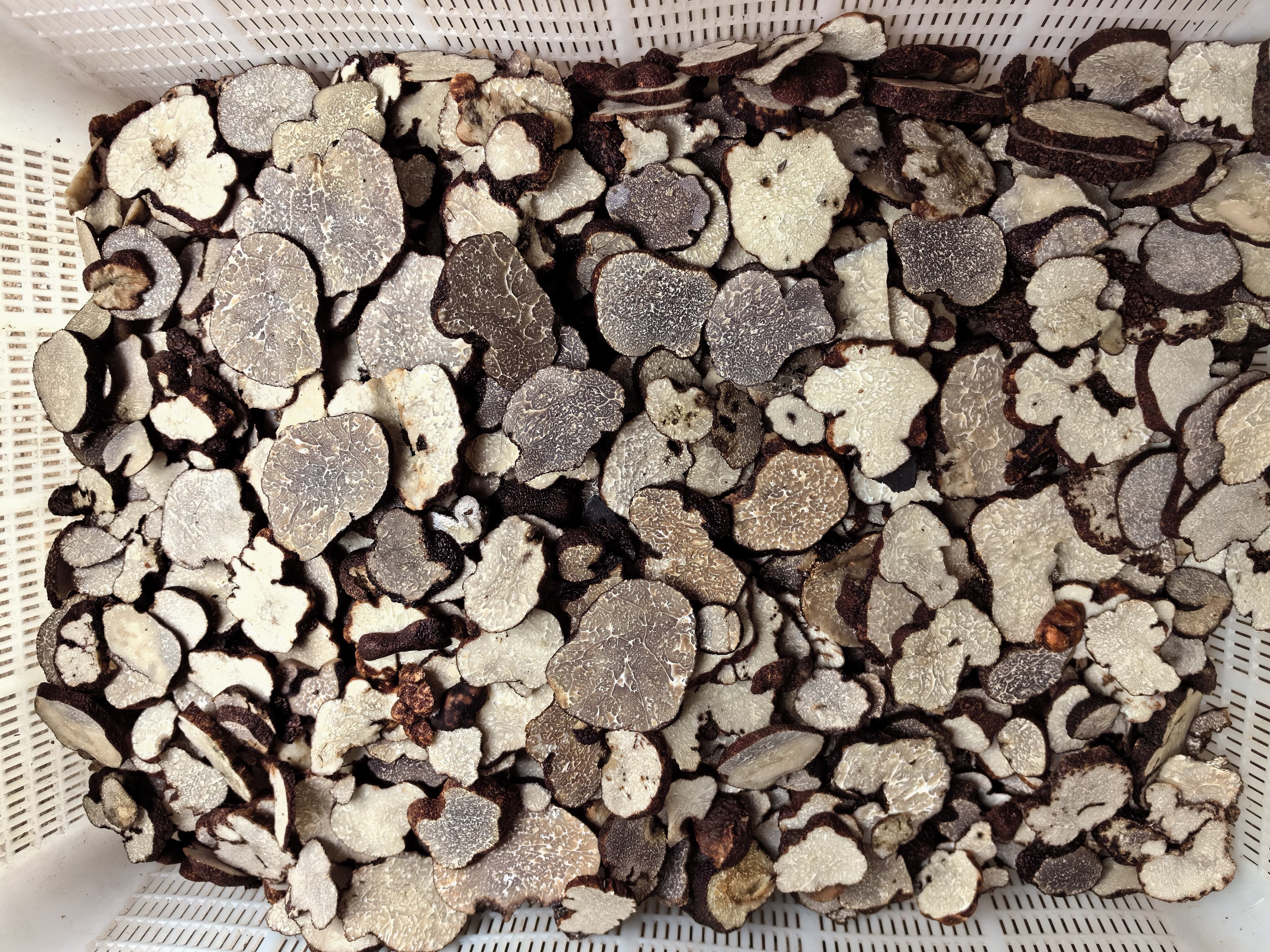
Yunnan Province: China’s Leading Black Truffle Production Hub
Geographic Dominance of Yunnan in Black Truffle Cultivation and Wild Harvest
The mountains, mild weather, and vast woodlands of Yunnan make it a prime spot for growing both wild and farmed black truffles. Around 70% of all truffles grown in China come from this region, particularly from places such as Diqing and Lijiang where the quality tends to be best. Wild varieties grow naturally in mixed oak and pine woods located roughly between 1800m to 3000m above sea level. These areas have good drainage thanks to limestone underneath and maintain just enough moisture throughout the year to let the truffles flourish without getting waterlogged.
Cultivation Techniques and Seasonal Harvesting Practices for Black Truffle in Yunnan
Most farmers grow truffles through a process where they plant special fungi called Tuber indicum alongside young oak and hazelnut trees. This technique has been worked on for about 15 years now, and many growers report getting around 40 to 50 percent successful harvests. When it comes to timing, wild truffles tend to come up between November and February, but those grown on farms usually appear sooner, generally from September through December. Many growers these days prefer using trained dogs instead of old fashioned rakes to find the truffles. This helps keep the soil healthy and produces better quality mushrooms. About two thirds of all truffle farms have made the switch to canine helpers, which makes sense when considering both environmental benefits and improved yields.
Economic Impact and Export Growth of Yunnan’s Black Truffle Since 2015
According to figures from last year, the truffle trade in Yunnan brought in around 58 million dollars worth of exports, which represents nearly triple what it was back in 2015. Looking at the latest economic report for Yunnan released earlier this year, we see that over 8 out of every 10 items shipped overseas head straight to wealthy customers across Europe and Japan. Farmers are finding new ways to make money by creating value added goods like those freeze dried truffle slices that command higher prices on international markets. While this growing industry provides employment for roughly 23 thousand people living in rural areas, there remains serious concerns about future sustainability. Climate changes and poor soil conditions are already affecting between 15 and 20 percent of the land currently used for cultivation, raising questions about long term viability for many local producers.
Sichuan Province: Wild Black Truffle Hotspot in High-Altitude Forests
Key regions in Sichuan—Ngawa and Garzê—for wild black truffle collection
Most of Sichuan's wild black truffles come from just two regions: the Ngawa Tibetan and Qiang Autonomous Prefecture along with the Garzê Tibetan Autonomous Prefecture, which together make up around 68% of total production. These mountainous areas between 2,800 meters and 3,500 meters above sea level have those special mixed forests of conifers and oaks where local foragers still use their time-honored methods to find Tuber indicum by sweeping the ground carefully. Recent research from 2023 found something really interesting too. The survey pinpointed Huidong County within Garzê as having what might be the most concentrated natural black truffle population in all of Asia, with roughly 1.2 kilograms growing on each hectare of land there.
Wild truffle collection follows strict seasonal protocols, with 85% of harvesting occurring between October and December when aroma compounds reach peak concentration.
Ecological conditions supporting natural black truffle growth in Sichuan
The best places to find truffles in Sichuan have soil that's rich in calcium and slightly alkaline, typically with a pH range from about 7.8 to 8.4. These areas get between 900 and 1,400 millimeters of rain each year, and temperatures generally hover around 15 degrees Celsius. Most truffles grow near certain types of trees. The main ones are Yunnan pine, scientifically known as Pinus yunnanensis, and Himalayan oak, or Quercus semecarpifolia if we're getting technical. A recent study from 2023 looked at this stuff using satellite data and found something interesting: nearly all the good truffle spots (like 92%) sit on slopes facing southwest. These slopes usually tilt between 25 and 40 degrees, which turns out to be just right for proper drainage and enough sunlight for those precious Tuber indicum mushrooms to develop properly.
Local cooperatives and their role in sustainable truffle supply chains
In Sichuan, six big cooperatives handle about 43 percent of the wild truffle market using some pretty smart methods. They rotate forests every three years to let them recover naturally. Their training programs for local farmers have certified well over 8,000 people since 2020, teaching them how to spot and harvest truffles properly. And these groups also set up special storage centers where they keep the truffles cool right after picking, cutting down on waste by nearly 37%. According to numbers from the Sichuan Forest Bureau, areas managed by these cooperatives actually produce 19% more truffles compared to places without such oversight. So what does this mean? When done right, sustainable practices don't just protect nature but also boost production levels significantly.
Shaanxi Province: Emerging Frontier for Cultivated Black Truffle
Truffle Farming Expansion in the Qinling Mountains Through Symbiotic Afforestation
The people of Shaanxi have really taken off with growing black truffles in the Qinling Mountains lately. They're doing something clever called symbiotic afforestation where they plant oak and hazelnut trees together with those special Tuber indicum spores, kind of recreating what happens naturally in the wild. What makes this approach so cool is that it cuts down on how long it takes for the truffles to colonize the area. Instead of waiting 5 to 7 years, farmers now see results within just 3 or 4 years. Since around 2018, more than 3,200 hectares of land that wasn't great for regular farming have become these truffle groves. The region's soil is packed with limestone, which turns out to be perfect for this stuff, plus the climate works wonders too. Some studies done back in 2014 by Reyna and Garcia-Barreda showed that this method actually boosts production by about 40% compared to collecting wild truffles. Pretty impressive when you think about it, right? This success story in Shaanxi shows what can happen when traditional methods meet modern science.
Government Initiatives Promoting Black Truffle Cultivation in Shaanxi
Local government bodies have started backing truffle cultivation efforts by offering financial help that covers around thirty percent of young tree expenses plus providing no-cost mushroom growing classes to folks living in the countryside areas. Last year saw a test run in Hanzhong where they linked about 120 different farms together with shared processing centers, which helped reduce waste after harvesting by nearly one fifth according to reports. The goal behind all this support is pretty straightforward really wanting to get Shaanxi producing approximately 150 tonnes each year within four years from now, making them number three on the list of major truffle producing regions in China right behind Yunnan province and Sichuan province currently leading the market.
The Role of Farmers in China’s Black Truffle Supply Chain
Farmer Participation Across Yunnan, Sichuan, and Shaanxi in Black Truffle Harvesting
Most of China's wild black truffles come from small farms, actually around three quarters according to recent surveys. The numbers vary quite a bit across different provinces though. Yunnan has the highest rate at about 63%, followed by Sichuan with nearly half the harvest coming from smallholders there. Shaanxi is still developing its cultivation methods, so only about a third comes from local farmers in those mountainous areas. When it comes to how they collect these valuable fungi, families tend to handle most of the work themselves up in the hills. But down in the flatter regions, some farmers are starting to sign contracts with bigger operations instead. A lot of truffle hunters also grow other crops during different seasons to make ends meet. This mix of gathering wild mushrooms and growing food helps many rural families survive economically even when truffle prices fluctuate.
Community-Based Labor Models and Informal Trade Networks in Rural Areas
Village cooperatives enhance efficiency through shared equipment rentals, collective bargaining with buyers, and cross-family quality control teams. These informal networks facilitate 41% of domestic transactions, with many producers selling directly to urban specialty markets or restaurants. While bypassing corporate intermediaries allows greater profit retention, most operate outside formal export channels.
Challenges Between Regulated Markets and Unregistered Black Truffle Trading
The market for wild mushrooms shows a big difference in prices between official government auctions at around $920 per kilogram versus informal sellers who get only about $610/kg. This pricing discrepancy has caused quite a bit of frustration among those harvesting these valuable fungi. Most collectors in regions like Yunnan and Sichuan don't actually have proper trading licenses either. About 72% of them make their sales through various means including using mobile payment platforms, handing over cash directly to local middlemen, or even shipping their goods across borders to buyers from countries like Thailand and Vietnam. While tracking product quality becomes tricky in such a fragmented system, it still supports livelihoods for approximately 890 thousand families living in rural areas where income from truffles is essential for survival.
Market Trends and Demand for Fresh Black Truffle in China
Pricing Dynamics and Demand Drivers for Fresh Black Truffle Domestically
The black truffle market inside China has seen some serious growth after 2020 thanks largely to people wanting to splurge on fancy meals and better ways to keep these pricey fungi fresh longer. The shelf life improvements alone add about 40 to 50 extra days before they go bad. Most of this action happens in big cities like Beijing, Shanghai and Guangzhou which together eat up around two thirds of all truffles sold nationally. During winter holidays when everyone wants something special, prices can hit as high as 9,200 yuan per kilogram or roughly $1,265 if converted. Chefs teaming up with local producers and the whole farm to table thing has really expanded where truffles show up on menus. They're not just limited to Michelin star restaurants anymore. Since early 2021 we've seen demand jump by nearly a quarter each year across different segments of the food industry.
Export Strategies Shaping China’s Position in the Global Black Truffle Market
Chinese truffle exporters are finding clever ways to get their products into high-end markets by exploiting the fact that Tuber indicum shares genetic traits with the prized European black truffle, Tuber melanosporum. The situation changed quite a bit after 2022 when companies started implementing blockchain tracking systems that made everything much more transparent for buyers. At the same time, working closely with distributors from France and Italy actually managed to cut down on import duties by about 18 percent. Another big boost came from government supported vacuum freeze drying tech which extended shelf life significantly. This advancement alone pushed shelf stable exports up by nearly a third last year according to available data. Looking at current trends, almost 6 out of every 10 truffles coming out of China now go straight to food processing plants rather than raw material markets. This shift has firmly established China as the top source of truffles for those fancy Michelin star restaurants across the globe.
FAQ Section
What are the major black truffle production provinces in China?
The major provinces for black truffle production in China are Yunnan, Sichuan, and Shaanxi.
How are black truffles cultivated in Yunnan?
A special fungus called Tuber indicum is planted alongside young oak and hazelnut trees, resulting in a successful harvest rate of 40 to 50 percent.
Why is Sichuan a hotspot for wild black truffles?
Sichuan has specific ecological conditions like calcium-rich soil, mixed forests, and ideal rainfall that support natural black truffle growth.
What role do cooperatives play in truffle production in Sichuan?
Cooperatives rotate forests, offer training, and have storage centers to improve sustainable practices and boost production levels.
How has truffle farming expanded in Shaanxi?
Through symbiotic afforestation, black truffle farming has expanded in Shaanxi, enhancing production and reducing colonization time.
How does informal trading affect the black truffle market?
Informal trading creates price discrepancies and challenges in tracking quality but supports livelihoods for many rural families.
Table of Contents
- Yunnan Province: China’s Leading Black Truffle Production Hub
- Sichuan Province: Wild Black Truffle Hotspot in High-Altitude Forests
- Shaanxi Province: Emerging Frontier for Cultivated Black Truffle
- The Role of Farmers in China’s Black Truffle Supply Chain
- Market Trends and Demand for Fresh Black Truffle in China
-
FAQ Section
- What are the major black truffle production provinces in China?
- How are black truffles cultivated in Yunnan?
- Why is Sichuan a hotspot for wild black truffles?
- What role do cooperatives play in truffle production in Sichuan?
- How has truffle farming expanded in Shaanxi?
- How does informal trading affect the black truffle market?